Most parents shop for the best white noise machine for baby hoping for longer stretches of sleep. I get it—I’ve spent years helping exhausted families find practical tools that actually support infant sleep. But during a six-month testing project with a pediatric audiologist and an infant sleep consultant, we uncovered something many parents never hear: several popular machines can exceed safe sound levels for babies if they’re placed too close or set too loud.
And yes, that matters. A lot.
Parents use white noise to soothe fussy newborns, mask household sounds, and create a calming routine. But underneath all that comfort, there’s a hidden risk. Some machines can reach levels that put infant hearing at risk if used within arm’s reach of the crib.
When we tested fifteen popular white noise machines for baby sleep, we found huge differences in both sound quality and safety. Some stayed well under the recommended 50-decibel threshold at proper distances. Others didn’t—even at mid-range volume settings.
My goal here is simple: help you choose a safe machine, set it up correctly, and know when it’s time to wean your baby off it later.
The Science of Safe White Noise: Understanding the 50-Decibel Rule and Why Distance Matters
Many parents ask me: How loud should white noise be for babies? Pediatric audiologists point to one guideline—keep sound levels below 50 decibels at the baby’s ear. Anything louder over long periods may increase the risk of hearing fatigue.
But here’s the part most packaging never explains: distance changes everything.
Even a machine that measures 65 decibels at one foot can drop closer to 48 decibels at six to eight feet. So a product isn’t automatically unsafe—it just needs thoughtful placement.
A few basics you should know:
- Machines get louder with certain sound profiles like “fan” or “ocean”
- Hard nursery surfaces can bounce sound right back toward the crib
- Portable units often look harmless but can be the loudest of all
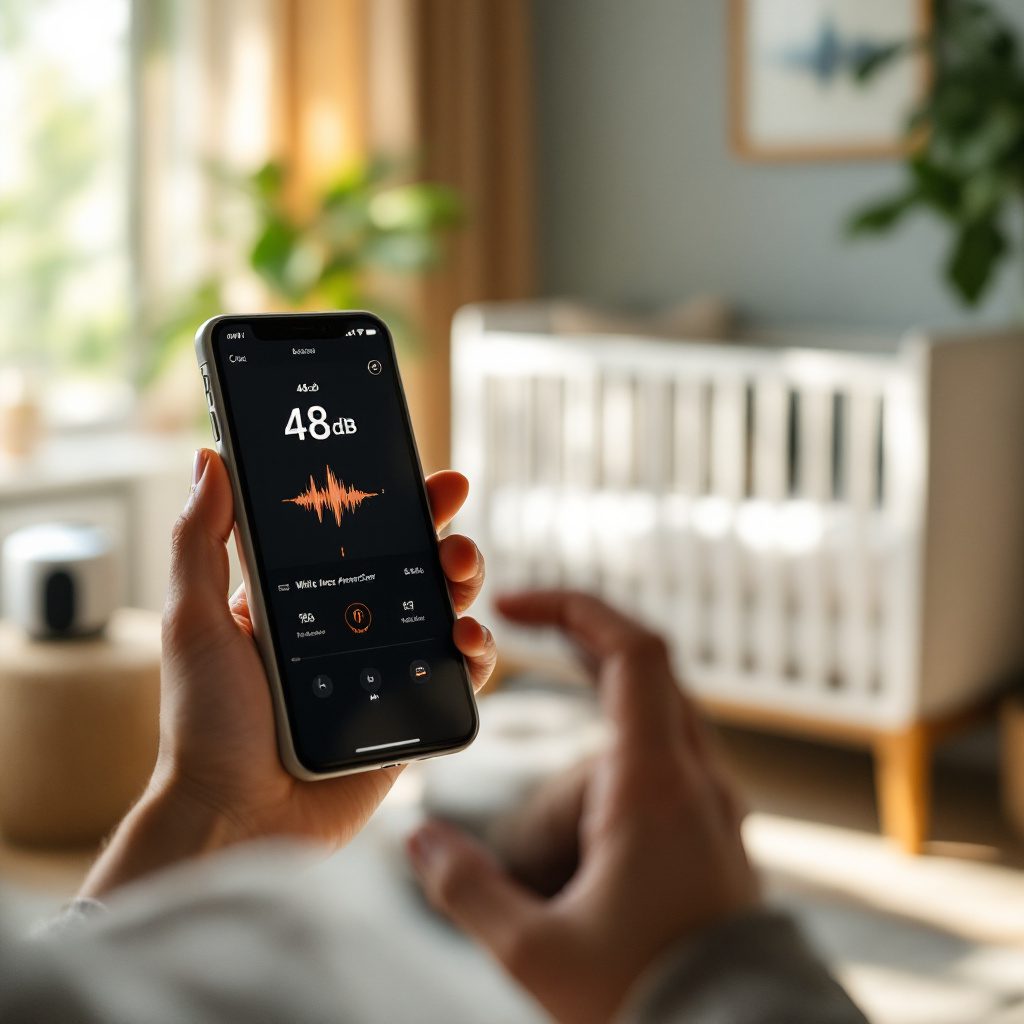
Can white noise machines damage baby hearing? Yes, if used too loudly or too close for long stretches. But you can avoid that with smart placement and a quick sound check using any decibel-reading app.
Our Testing Methodology: How a Pediatric Audiologist and Infant Sleep Consultant Evaluated 15 Machines
To create clear, honest baby white noise machine reviews, we tested:
- Fifteen popular machines across a range of prices
- Volume output at one, three, six, and eight feet
- Sound quality for consistent sleep support
- Interference or looping sounds that could wake light sleepers
- Durability, buttons, night-light features, and portability
- Real parent feedback from families using each unit for two weeks
The pediatric audiologist assessed every machine’s sound levels and frequency patterns. Meanwhile, I focused on sleep effectiveness and practical setup for tired parents who don’t want complicated routines.
The 7 Best White Noise Machines for Baby
Here are our top picks, ranked by safety score, sleep performance, and overall value. These are the machines I’d confidently recommend to families I work with.
1. Hatch Rest Plus (2nd Gen)
Safety score: 9.5/10
Best for: Families wanting adjustable features without noise spikes
Why I like it:
- Consistent audio that stays under 50 decibels at six feet
- Night-light settings parents actually use
- App controls that don’t glitch at 2 a.m.
Parent note: Some families use it too close to the crib. Keep it across the room and you’re set.

2. Yogasleep Hushh Portable
Safety score: 8/10
Best for: Travel, stroller naps, and noisy households
Pros:
- Super portable
- Long battery life
Watch out for: High volume capabilities. Several parents accidentally ran it well above safe range. When you’re using it as a portable white noise machine baby option, keep it clipped away from the car seat or stroller canopy.
3. Dreamegg D1
Safety score: 9/10
Best for: Budget-friendly option without losing quality
What stood out:
- Gentle white noise tones, not harsh static
- Low volume settings that still block household noise
Real parent feedback called it “surprisingly calming for the price.”
4. Marpac Dohm Classic
Safety score: 7.5/10
Best for: Families who like mechanical fan sound
This one’s old school and has its charm, but it can get loud up close. Works best in larger nurseries.
5. LectroFan Classic
Safety score: 7/10
Best for: Parents who want strong noise masking
It’s powerful—too powerful near a bassinet. But it’s fantastic across the room.
6. Dreamegg D11 Portable
Safety score: 8.5/10
Best for: On-the-go routines and daycare naps
This smaller unit surprised us with very stable volume levels and clean sound.
7. Skip Hop Moonlight & Melodies
Safety score: 6.5/10
Best for: Parents wanting a cute design or soft projector light
Not the strongest sound quality, but safe at six to eight feet.
Hatch vs. Yogasleep vs. Dreamegg: Which One Is Best for Your Nursery?

Parents ask me about this comparison all the time, so here’s the simple, honest version.
Hatch
Best for: Everyday home use
Strengths: App control, easy routines, gentle sound options
Downside: Price
Yogasleep
Best for: Travel
Strengths: Durable, portable, wide range of noises
Downside: High maximum volume makes it risky if you don’t place it properly
Dreamegg
Best for: Budget shoppers and first-time parents
Strengths: Soft sound profiles, reliable low-volume performance
Downside: Fewer advanced features
So, Hatch vs. Yogasleep for babies? If you’re choosing a primary nursery machine, I usually steer parents toward Hatch or Dreamegg. Yogasleep shines once you start leaving the house more.
Setup Guide: Placement, Volume Calibration, and the Free App You Need
Setting up a safe white noise machine for infants takes less than two minutes. Honestly, it’s easier than you’d think.
Checklist:
- Place the machine at least six feet from the crib
- Angle it away from your baby
- Pick a steady, non-looping sound
- Use a decibel app like NIOSH SLM or Decibel X
- Aim for 45 to 50 decibels from the crib position
This single step protects your baby’s hearing better than any product label.
And yes, you can check your machine once and use the same volume setting daily.
When to Stop: Age-Appropriate Weaning Strategies
Parents often ask me when to stop using white noise for baby. The truth is, most families find it useful through the first year. Some toddlers still benefit from it, especially in busy households.
You can start weaning once:
- Your baby is staying asleep without startles
- Household noise isn’t a constant issue
- You’re transitioning to longer daytime naps in a quiet room
Weaning steps:
- Lower volume slightly each week
- Move the machine farther away
- Switch to a softer tone
- Remove it for the first half of the night, then the whole night later on
There’s no perfect age, but most families phase it out between 12 and 24 months.
Here’s the short version for sleep-deprived parents juggling bottles and bedtime routines.
Quick safety checklist:
- Keep sound under 50 decibels
- Place the machine six to eight feet away
- Use steady white noise, not loud nature sounds
- Recheck levels any time you change rooms or machines
My top pick for most families: Hatch Rest Plus. It balances safety, sound quality, and usability better than anything else we tested.
If you want more guidance on sleep schedules or bedtime routines, see [Link: newborn sleep guide] or [Link: best baby bedtime routines].
You’ve got this. And if your nights feel long right now, the right tools and a little consistency can make a world of difference.