Picture this: you’re standing in the baby aisle, holding two seemingly identical infant carriers. One has a gold seal you’ve never heard of. The other displays three different certification logos. Both cost about the same. And your baby’s safety depends on making the right choice in the next five minutes.
Here’s what keeps me up at night after a decade of testing baby products: so many parents can’t tell the difference between meaningful safety certifications and clever marketing badges. That’s not just a knowledge gap. It’s a genuine safety risk.
When I first started evaluating baby products professionally, I figured certification labels were pretty straightforward. A seal means it passed a test, right? Yeah, it turns out the reality is way messier than that. Some labels represent rigorous third-party testing that could genuinely save your child’s life. Others? They’re essentially stickers a company designed in-house to look official.
In this guide, I’m breaking down baby product safety certifications in plain language. The way I wish someone had done for me years ago. You’ll learn which certifications actually protect your baby, how to spot marketing fluff dressed up as safety credentials, and my 60-second verification system you can use while standing in any store.
The Big Three: CPSC, ASTM, and JPMA Decoded
Not all certifications carry equal weight. These three do the heavy lifting for baby safety in the United States. And honestly, understanding what each one actually does will change how you shop.
CPSC: The Legal Baseline
The Consumer Product Safety Commission isn’t optional. CPSC baby safety requirements are federal law, meaning every baby product sold in the U.S. must meet their mandatory standards. Consider CPSC compliance the minimum passing grade: it’s the floor, not the ceiling.
What do they actually test for?
- Lead and phthalate content in materials
- Small parts that present choking hazards
- Sharp points or edges
- Flammability of fabrics
- Specific structural requirements for cribs, play yards, and similar products
Here’s something most parents don’t realize. CPSC doesn’t pre-approve products before they hit shelves. They set the rules and investigate when things go wrong. A product can be sold for months before anyone catches a violation. Unsettling, I know.
ASTM: The Technical Standards
ASTM International creates the detailed technical specifications that CPSC often adopts into law. See “meets ASTM F2050” on a handheld infant carrier? That’s referring to a specific set of ASTM baby product standards covering structural integrity, stability testing, restraint systems, and more.
These standards are incredibly granular. Almost obsessively so. High chairs alone have specific requirements for tray attachment strength, tip-over resistance angles, and the force passive restraints must withstand. We’re not talking vague guidelines here. They’re precise engineering specifications.
JPMA: The Gold Standard for Voluntary Certification
Now we get to what JPMA certification actually means for your shopping decisions. The Juvenile Products Manufacturers Association runs a voluntary program, and that word “voluntary” is key here, where outside labs do the actual testing. Not manufacturers.
So why does this certification stand out?
- Products are tested in accredited laboratories, not manufacturer facilities
- Certification requires ongoing surveillance testing, not just a one-time pass
- Facilities are audited to verify manufacturing consistency
- Many standards exceed CPSC minimums
This certification is one of my first checkpoints when I’m evaluating products. It tells me a manufacturer was willing to pay for rigorous outside verification when they didn’t legally have to. That says something about their commitment.
Certification vs. Marketing: Spotting Meaningless Labels That Sound Official
This is where things get frustrating. The baby product industry has no shortage of official-looking seals that mean absolutely nothing.
Red Flags to Watch For
Self-awarded badges. A company creating a “Quality Tested” or “Safety Approved” logo that only appears on their own products? That’s marketing, plain and simple. I’ve seen brands invent entire certification programs that exist solely on their packaging. Wild, right?
Vague language. Labels saying “meets safety standards” without specifying which standards, or “tested for safety” without naming the testing laboratory: they tell you nothing useful. [Link: how to research baby product brands] before purchasing anything with ambiguous claims.
Country-of-origin confusion. “CE marked” means a product meets European safety standards, which differ from U.S. requirements. It’s a legitimate certification in Europe, but it shouldn’t replace CPSC compliance for products sold here.


Celebrity or expert endorsements. A pediatrician’s face on packaging doesn’t equal safety certification. Let me be blunt. Endorsements are paid partnerships, not test results.
Questions That Expose Fake Certifications
When you encounter an unfamiliar seal, ask yourself:
- Can I find this organization’s website independently, not through the product manufacturer?
- Does the certifying body test products from multiple competing brands?
- Is there a searchable database where I can verify this specific product?
If you answer “no” to any of these, proceed with healthy skepticism.
Category-by-Category Breakdown: Which Certifications Matter Most
Each product category has its own risk profile, so certification weight varies by what you’re buying. After years of testing, I’ve developed a priority list that might surprise you.
Cribs and Bassinets
Non-negotiables: CPSC compliance (legally required since 2011 for cribs), ASTM F1169 for full-size cribs, or ASTM F2194 for bassinets. Adding JPMA certification provides meaningful assurance here because structural failures in sleep products can be fatal. I’ve reviewed too many incident reports to sugarcoat that.
Watch out for: Vintage or secondhand cribs manufactured before current standards. The rules changed dramatically after a series of deaths from drop-side designs. [Link: safe sleep environment guide] for complete nursery setup recommendations.
Car Seats
Non-negotiables: Every car seat sold in the U.S. must meet Federal Motor Vehicle Safety Standard (FMVSS) 213. The National Highway Traffic Safety Administration enforces this, not CPSC, because car seats are vehicle safety equipment.
Bonus verification: The JPMA car seat certification program includes testing beyond FMVSS minimums, providing additional assurance through their rigorous third-party verification process.
My honest take: I won’t recommend a car seat without both FMVSS compliance and JPMA certification. I’ve seen crash test footage that changed how I think about this. The difference between adequate and excellent protection is stark.
Strollers
Non-negotiables: ASTM F833 covers stroller safety requirements including braking systems, stability, restraint strength, and folding mechanism locks.
Look for: JPMA certification provides extra confidence, though strollers generally present lower catastrophic risk than car seats or sleep products. Focus on locking mechanisms and restraint quality when you’re comparing models.
Feeding Gear
Non-negotiables: High chairs need ASTM F404 compliance. Bottle warmers and sterilizers should meet electrical safety standards.
Reality check: Baby bottles and feeding accessories have fewer specific certifications. Focus instead on material safety, particularly BPA-free claims and verification of food-grade plastics. FDA registration for food contact materials matters more here than JPMA certification.
The 60-Second Verification System: How to Check Any Product’s Certification Status In-Store
I developed this system after watching way too many parents make purchasing decisions based on misleading labels. You can verify whether a baby product is legitimately certified using just your smartphone. Seriously, just your phone.
Step 1: Find the Model Number (10 seconds)
Locate the exact model number on the packaging or product label. Generic product names aren’t specific enough for verification. You need the precise alphanumeric code.
Step 2: Check JPMA Certification (20 seconds)
Open your browser and visit the JPMA website to search their certified products database. Search the manufacturer and model number. Products either appear in this database or they don’t. No ambiguity exists.
Step 3: Search CPSC Recalls (20 seconds)
Go to cpsc.gov/recalls and search the product name and manufacturer. This takes seconds and could reveal active safety issues the store isn’t displaying.
Step 4: Quick Credibility Check (10 seconds)
Search “[certification name] + baby products” for any unfamiliar certification logos. Legitimate certifications will have informational results from multiple sources. Marketing badges? They typically only show results from the manufacturer who created them.
The entire process takes about a minute. I’ve taught it to hundreds of parents, and the feedback is consistent: once you know how to verify baby product certifications, you can’t unknow it.
Beyond Certifications: Pediatric Insights on Baby Product Safety
Certifications only get you so far. Ten years of talking to pediatricians taught me that baby safety labels explained on packaging tell just part of the story.
Proper Use Matters More Than Any Certification
A JPMA-certified car seat installed incorrectly is more dangerous than a properly installed seat with fewer certifications. Here’s the thing. Many pediatric injuries involve certified products used outside their specifications. These include children who’ve outgrown the weight limit, products assembled incorrectly, or safety features disabled for convenience.
Certification Doesn’t Equal Recall-Proof
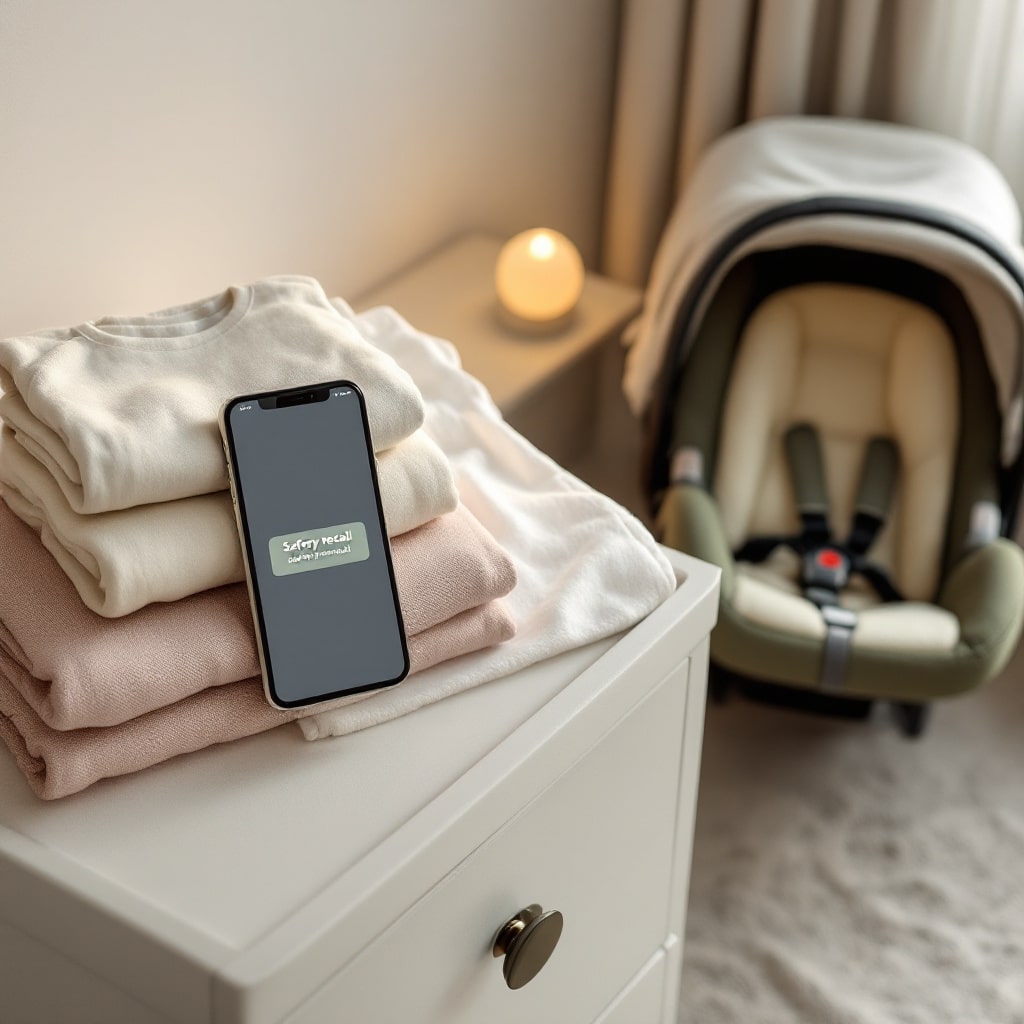
Even rigorously tested products can have manufacturing defects or design flaws that emerge after market release. [Link: baby product recall notification services] should be part of every parent’s safety system. Register your products with manufacturers, and check recall databases quarterly. I know, I know. One more thing to do. But this one matters.
Understanding JPMA Certification in Practice
Having this certification means a company invested in third-party verification. But you still need to use the product as intended, check for recalls, and retire items when they show wear or damage.
Age and Condition Matter
Certifications apply to new products in specified condition. A certified crib that’s been through three children, moved six times, and has wobbly joints? It’s no longer meeting the standard it was originally tested against. Know when to replace, not just what to buy.
Let me bring this back to that moment in the store, holding two products and trying to make the right call.
Your priority checklist:
- CPSC compliance is legally required, so it’s your baseline, not your goal
- JPMA certification indicates meaningful third-party testing
- ASTM standard references tell you exactly which protocols were met
- Unknown seals without searchable databases are marketing
- Verification takes 60 seconds with the system above
Quick-reference hierarchy:
Sleep products and car seats? Demand JPMA certification. Strollers and high chairs? JPMA adds value but isn’t always available for smaller brands. Feeding accessories? Focus on material safety claims you can verify.
My final thought on pediatrician-recommended baby safety standards: the professionals I work with consistently emphasize that no certification replaces vigilant parenting. Check your products regularly. Follow weight and age limits. Register everything. Stay informed about recalls.
You now understand what safety certifications baby products need, and more importantly, which ones actually mean something. That knowledge alone makes you a more capable advocate for your child’s safety.
Download your free verification checklist at the link below, and share this guide with other parents in your life who deserve to understand what’s actually protecting their babies.