Let me tell you about the moment I knew baby nail trimming was going to be my nemesis. My first daughter was six days old, and I watched in horror as she scratched her perfect little cheek with those tiny razor blades disguised as fingernails. I grabbed the generic clippers from the hospital gift bag, held my breath, and promptly nicked her thumb.
She screamed. I cried. My husband called his mother.
That was seven years and 47 baby nail clippers ago. Since then, I’ve tested everything from $3 drugstore finds to $40 electric gadgets. First on my own three kids, and then (with permission) on the babies of friends, family, and fellow mom group members. Somehow I’ve become the unofficial “nail clipper lady” in my pediatric nursing circles. And honestly? I’m totally okay with that.
Finding the best baby nail clippers isn’t about spending the most money or buying the trendiest product. It’s about matching the right tool to your baby’s age, temperament, and your own comfort level. Sounds simple, right? Yeah, it took me years to figure that out too.
In this guide, I’m sharing everything from my years of hands-on testing. You’ll learn why baby nails need special handling, which products actually work on squirming infants, and the technique that finally stopped me from drawing blood. Whether you’re building your first newborn grooming kit or replacing clippers that just aren’t cutting it (pun absolutely intended), I’ve got you covered.
Why Baby Nails Are Different: Paper-Thin Layers and Curved Beds
Before we get to tools, let’s talk biology for a second. Ever wondered why trimming baby nails feels like defusing a bomb? There’s actual science behind that anxiety.
Baby fingernails are basically tissue paper attached to skin. Soft, pliable, and often impossible to distinguish from the nail bed underneath. My second baby had nails so translucent I had to hold her hand up to the window just to see where the nail ended and skin began. And that nail bed? It curves differently than adult nails, wrapping around the fingertip in ways that make a straight cut risky.
What surprised me most during my research: newborn nails grow incredibly fast. We’re talking about trimming every three to four days for fingernails, while toenails grow more slowly and typically only need trimming every two to four weeks. So many opportunities to mess up if you don’t have the right approach.
Adult nail logic simply doesn’t translate here. Your standard bathroom clippers? Too big, too sharp on the edges, and designed for nails that don’t bend like cooked spaghetti.
Our Testing Method: Real Babies, Real Squirming, Real Results
I’m deeply suspicious of any review that seems to have tested products in pristine laboratory conditions. Real babies don’t hold still. They jerk their hands away at the worst possible moment. They wake up cranky. Sometimes they’re cooperative angels, and sometimes they act like you’re committing a war crime.
Over the past four years, I’ve tested more than 15 nail clippers and trimmers on babies ranging from 5 days to 18 months old. My testing criteria focused on what actually matters to you as a parent:
Grip and control: Can you hold this steady with one hand while the other pins down a flailing arm?
Visibility: Can you see what you’re doing, or does the design block your view of the nail?
Cut quality: Does it leave jagged edges that snag on literally everything?
Speed: How quickly can you get all ten fingers done before meltdown mode kicks in?
Nick risk: This one’s obvious. Did it draw blood?
Each clipper got tested multiple times across different baby ages and temperaments. My neighbor’s twins were particularly helpful, since they have completely different nail shapes. Thick, curved nails versus thin, flat ones require different approaches, and those two gave me the perfect comparison.

Best Baby Nail Clippers by Category
Best for Newborns (0–3 Months)
For the tiniest babies with the scariest nails, I recommend the FridaBaby NailFrida SnapClipper Set. That rounded safety spy hole lets you see exactly what you’re cutting, and the curved blade matches newborn nail shapes naturally.
What sets it apart? The ergonomic handle actually makes sense. You grip it like a pen, which gives you precision rather than the awkward squeeze of traditional clippers. [Link: newborn care essentials] I’ve used these on babies as young as four days old without incident.
Runner-up: Safety 1st Sleepy Baby Nail Clippers. Budget-friendly and surprisingly effective, though the viewing window is smaller.
Best for Wiggly Babies (4–12 Months)
Once babies discover their hands can grab things, including your clipper mid-trim, everything changes. Piyo Piyo Baby Nail Scissors became my go-to for this age.
Yes, I said scissors. I know, I know. The baby nail scissors versus clippers debate could fill entire forums. But hear me out: for mobile babies, scissors give you way more control when they inevitably move. Those rounded tips prevent pokes even during surprise jerks.
A catch, though: scissors have a steeper learning curve. If you’re not comfortable with them, stick with the FridaBaby model and just keep a firmer grip on baby’s hand.
Best Budget Option
Not everything needs to cost a fortune. The American Red Cross Deluxe Baby Grooming Kit runs about $12 and includes clippers that honestly rival products costing three times as much. Going the kit route means you’re also getting a brush, comb, and nail file, making it a solid starter newborn grooming kit.
What about the clippers themselves? They feature a small, contoured blade and decent visibility. Nothing fancy, but they get the job done.
Electric Baby Nail Trimmer vs. Manual Clippers: The Honest Comparison
Every parenting forum has parents swearing by electric baby nail trimmers. Others think they’re overpriced gimmicks. So which is it? After extensive testing, here’s my unfiltered take.
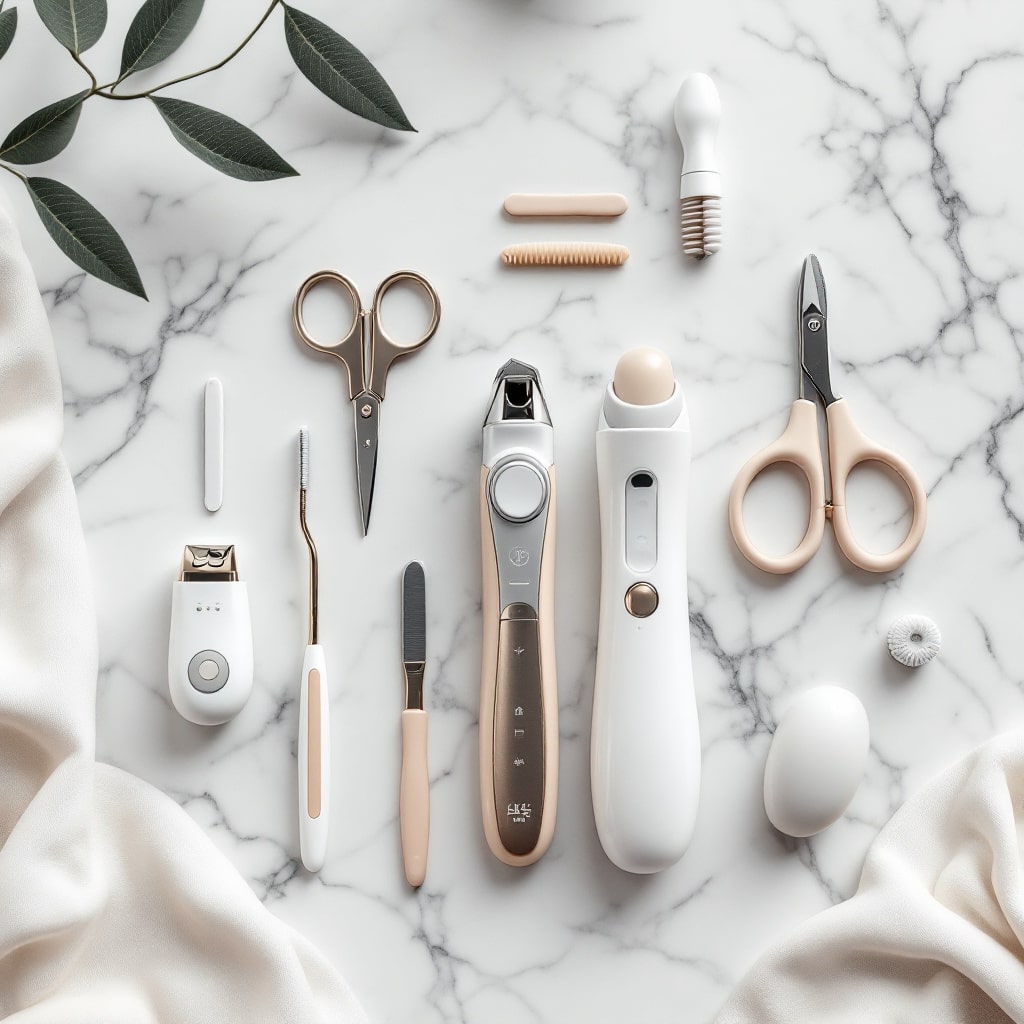
Electric nail trimmers work by gently filing the nail down rather than cutting. Good ones, like the Haakaa Electric Nail Trimmer, have multiple speed settings and interchangeable filing pads for different ages.
Pros of electric baby nail trimmers:
- Nearly impossible to cut skin (that’s the big selling point)
- Some include a light feature, which is genuinely helpful for sleeping baby trims
- Less anxiety-inducing for nervous parents
- Great for smoothing rough edges after clipping

Cons that reviews don’t mention:
- They take noticeably longer than clipping. Exact time varies based on nail thickness, device quality, and your experience, but expect filing to be a slower process overall.
- That sound? It can wake light sleepers.
- They really struggle with longer nails. You need to stay on top of maintenance.
- Battery life can be totally unpredictable.
My honest verdict on electric vs. manual baby nail clippers: I use both. Electric for touch-ups and sleeping baby sessions, manual for the actual heavy lifting when nails have gotten too long. Thinking you’ll exclusively use an electric trimmer? You’ll probably end up buying clippers anyway.
Most baby nail trimmer reviews don’t mention this hybrid approach, but it’s what works in real life.
The Anti-Nick Technique: Step-by-Step Method That Actually Works
Below is the method I’ve refined over hundreds of nail-trimming sessions. It works regardless of whether you’re using the safest baby nail clippers or basic drugstore finds.
Step 1: Timing is everything. Trim during or immediately after feeding, or during deep sleep. A drowsy baby is a cooperative baby. Post-bath, however, is actually terrible timing. Wet nails tear rather than cut cleanly.
Step 2: Positioning matters more than you’d think. Sit baby on your lap facing away from you, with their back against your chest. This gives you the same angle they’d have looking at their own hands.
Step 3: Isolate one finger at a time. Gently press the finger pad away from the nail. This creates visible separation between nail and skin. Seriously, don’t skip this step.
Step 4: Cut straight across, not curved. This prevents ingrown nails and reduces nick risk. You can round the corners slightly with a second snip if needed.
Step 5: Work fast but not rushed. Get one hand done, take a break if needed, then tackle the other.
So how do you cut baby nails without cutting skin? That finger pad press technique in step three: that’s your answer. When you push that pad down and away, you create a clear target zone. Combined with baby nail clippers that won’t cut skin, you’ve dramatically reduced your risk.
[Link: baby safety tips] for more protective care strategies worth knowing.
After all this testing, my final ranking looks like this:
- FridaBaby NailFrida SnapClipper Set – Best overall for nervous parents and newborns
- Piyo Piyo Baby Nail Scissors – Best for wiggly babies once you’re comfortable with scissors
- Haakaa Electric Nail Trimmer – Best supplementary tool and anxiety reducer
And the one feature that actually prevents cuts? Visibility. Every product I’ve loved has one thing in common: you can clearly see the nail edge before you cut. Products marketed as the best baby nail clippers for newborns aren’t necessarily the ones with the most safety claims. They’re the ones that let you see what you’re doing.
Fancy magnifying lenses, ergonomic handles, cushioned grips. All nice. But if the clipper blade blocks your view of the nail? You’re working blind. And working blind is how accidents happen.
Trust me. I learned that the hard way at six days postpartum, crying alongside my firstborn, wondering why something so small felt so impossible.
It doesn’t have to be impossible. With the right tools and technique, you’ll be trimming those tiny daggers like a pro within weeks.